Dalinar–Adolin relationship
The Way of KingsThe Dalinar–Adolin relationship joins heroic inheritance to intimate fear. Adolin loves and admires Dalinar Kholin as the Blackthorn, a soldier whose reputation was built through battlefield genius, repeated victories, and the reunification of Alethkar’s warring highprinces. Yet the father Adolin sees in the present is troubled by visions, distant in expression, and apparently capable of making dangerous judgments. Their bond therefore becomes a test of what a son owes a revered father when the image of greatness no longer guarantees soundness of mind or action.
Identity and Foundation
Adolin’s view of Dalinar is formed by an almost monumental image. Dalinar rides a massive black Ryshadium and wears Shardplate as though it were his natural state rather than ceremonial armor. To Adolin, the armor is a tool in the hands of a soldier, and Dalinar’s ease with its strength and speed confirms the reputation of one of the greatest warriors and generals who ever lived. That image is not merely public. It is the standard against which Adolin measures the man he loves.
The standard makes the present especially painful. Adolin passionately wishes that Dalinar would do more to live up to his reputation, because the father’s authority now appears diminished by episodes that neither son can explain. Dalinar remains the Blackthorn, the living legend who has defeated countless challengers in duels, won dozens of battles, and helped reunite Alethkar after centuries of strife; the possibility that this same man may be losing his wits turns admiration into dread rather than replacing it.
Visions and the Crisis of Trust
Adolin notices that Dalinar is thinking about the visions when the older man’s expression becomes distant and his eyes troubled. During a highstorm, Adolin quietly tells Renarin Kholin that the visions have happened again and asks what Dalinar’s episodes mean. The question is not idle curiosity. Adolin is trying to determine whether the father he trusts is experiencing supernatural revelation, the return of old trauma, or the onset of illness.
He considers natural explanations drawn from family history. Adolin’s grandfather had suffered from delusions and, in old age, believed himself to be back at war. Adolin wonders whether Dalinar is reliving youthful battles, repeatedly returning to the night when his brother Gavilar Kholin was murdered by the Assassin in White, or confusing the visions of the Knights Radiant with the products of a damaged mind. The competing explanations leave him sick with uncertainty because each one changes what filial duty requires: a visionary must be heard, while a delusional man must be protected from the consequences of his own convictions.
Adolin’s fear is intensified by the scale of Dalinar’s symbolic importance. The entire kingdom looks up to the man who once embodied military strength and political unity. Adolin is therefore not simply watching an aging parent falter in private. He fears that the collapse of Dalinar’s judgment could expose the Kholin house and Alethkar itself to ridicule, manipulation, and catastrophe. His private anxiety becomes inseparable from a public crisis of succession and authority.
Confrontation Between Son and Father
The pressure eventually erupts into open conflict. Adolin accuses Dalinar of tolerating lies and insults from others while immediately chastising his sons whenever they take what Dalinar considers an inappropriate step. His complaint is fundamentally relational: he feels that Renarin and he are held to a harsher standard than everyone else, and he asks whether Dalinar’s sons mean so little to him.
Dalinar freezes as though struck. Adolin recognizes that he has gone too far and is speaking too loudly, but the accusation continues to force its way out. He tells Dalinar that he is not well and demands that the family stop tiptoeing around the problem. In Adolin’s view, Dalinar has been inventing increasingly irrational explanations to account for his lapses; accepting that the mind can stop working properly would be painful, but refusing to acknowledge the possibility is more dangerous. The confrontation reveals both Adolin’s anger and his care. He is not rejecting Dalinar’s authority for its own sake; he is trying to prevent love and reverence from becoming excuses for silence.
The exchange also exposes the gap between Dalinar’s self-conception and Adolin’s perception. Dalinar’s authority depends on discipline, clarity, and the ability to carry responsibility for others. Adolin sees that ideal becoming unstable, while Dalinar experiences the son’s challenge as an attack on the authority he has spent a lifetime embodying. Their disagreement is consequently not only about visions. It is about whether a legendary identity can survive the admission of vulnerability.
Responsibility, Failure, and Mutual Recognition
Later, Adolin approaches Dalinar after Renarin has recovered from a fit and asks what Dalinar will do if the evidence proves that Adolin is right and the visions are only products of his own mind. Dalinar’s answer is strikingly candid. Part of him wishes that madness were the explanation because it would be familiar and could be treated. He says he would give Adolin the princedom and seek help in Kharbranth.
Dalinar’s fear is therefore not simply fear of being called insane. He is also afraid that the visions may be real and that accepting their instructions could demand decisions harmful to Alethkar. If they are delusions, he can surrender authority and seek treatment; if they are genuine, he must decide whether to trust them. He even acknowledges that it might be better for Alethkar if he proved mad, because that outcome would at least be easier to manage. The father’s willingness to imagine handing the princedom to Adolin shows that the relationship has moved beyond denial into a grim consideration of succession.
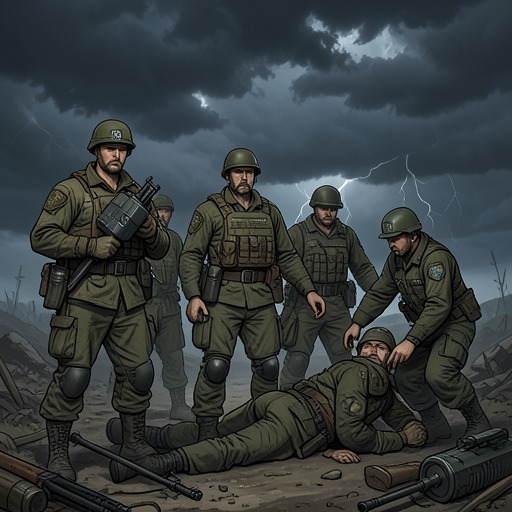
During the battle in which the Parshendi appear to leave no survivors, Adolin recognizes that Dalinar’s trust in Torol Sadeas has helped bring the army to destruction. Dalinar expects accusation and demands that Adolin say plainly that he has led them to ruin, then accepts the blame himself, admitting that he should never have risked their house for what he calls foolish dreams. Adolin’s earlier doubts are thus vindicated in the harshest possible setting, but vindication offers no comfort. The son’s judgment is correct, while the father he loves is trapped in the consequences of having acted against it.
Protection, Sacrifice, and Continuing Bond
After the disaster, Dalinar considers confronting Sadeas in armor, declaring formal war, and perhaps summoning his Shardblade to kill his former friend. He refuses that course because his soldiers are weak and his position is precarious. Formal war would destroy both his house and the kingdom, so he chooses protection of Alethkar over immediate revenge. This decision matters to Adolin because it preserves the moral and political principle that still connects the father he reveres with the father whose judgment he has challenged: Dalinar can be fallible without abandoning responsibility.
Their mutual care becomes concrete in the repair of their Shardplate. The army gathers infused gemstones from twenty-six hundred men to recharge and reinforce Dalinar’s armor, which remains scarred and cracked but fit for battle. Adolin’s armor is repaired as well, though he is left without a gauntlet. Dalinar initially refuses to accept his son’s gauntlet, then yields to Adolin’s logic that, if one of them must go without, it should be the younger man. Inside Shardplate, their differences in age disappear; outside it, Dalinar is an aging man in his fifties and Adolin a man in his twenties. The exchange makes their bond visible as practical protection rather than sentiment alone.
The relationship does not end with a clean resolution. Dalinar still does not know what to make of the visions or their apparent failure to warn him against trusting Sadeas. Adolin’s concerns have not been erased, and Dalinar’s authority has not returned untouched. Instead, father and son continue forward amid uncertainty, with Alethkar placed before revenge and with each forced to recognize the other’s judgment. Their bond survives not because the conflict disappears, but because responsibility gives their love a form that can endure disagreement.